Prosthetic Socket
A scan-to-design engineering concept combining reverse engineering, a 1000 N static study, topology-informed redesign, and additive-manufacturing preparation.
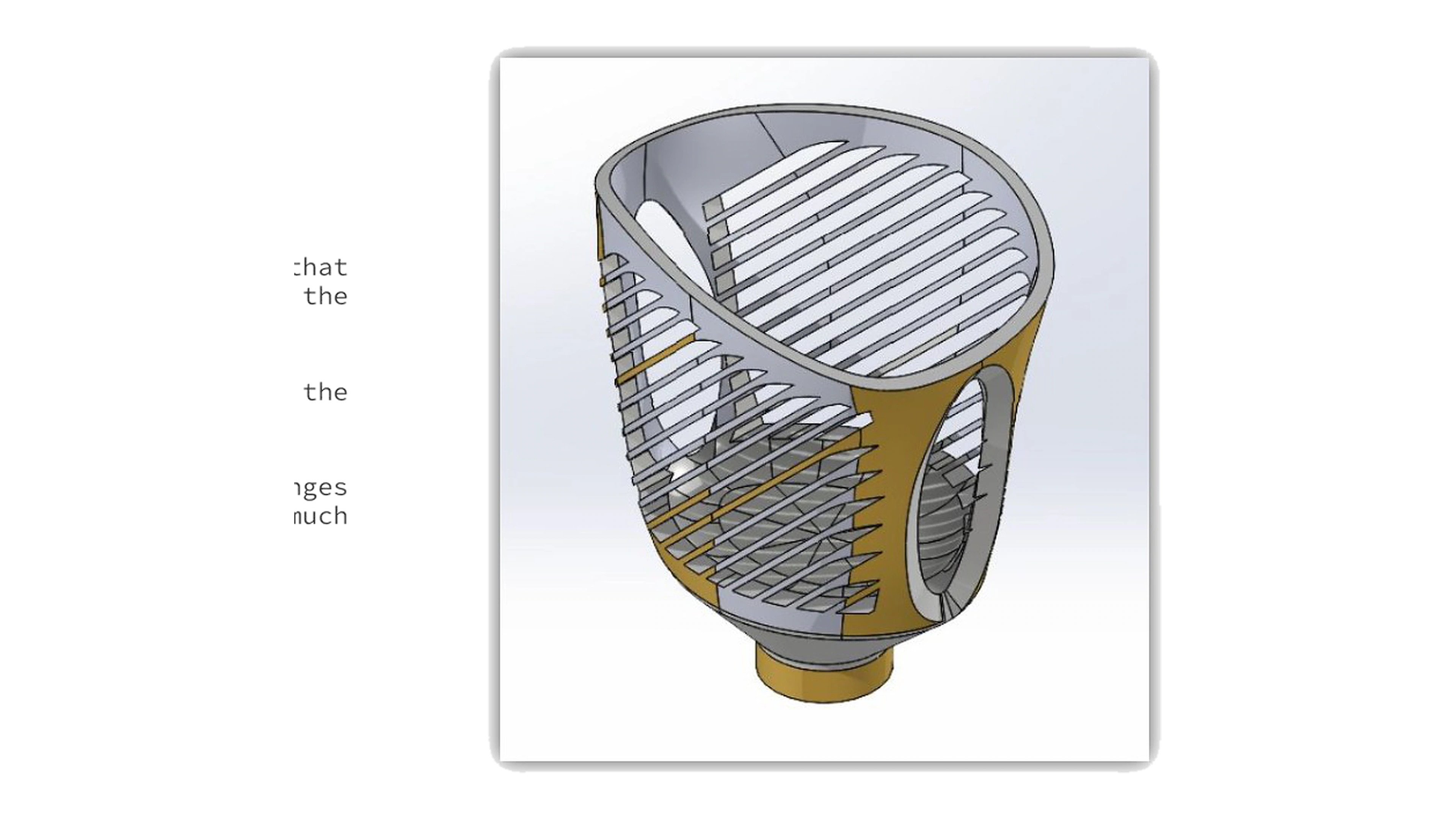
Optimization has to become buildable geometry.
The page separates structural outputs and manufacturing orientations so each stage can be inspected individually.
Concept only — engineering study, not a clinically validated medical device.
Create the socket concept from a digital reference.
The workflow begins with a reference limb model prepared from mesh data and proceeds into reverse-engineered socket geometry.
Three results.
Three full-scale figures.
The original combined simulation figure has been split into independent displacement, stress, and strain images.
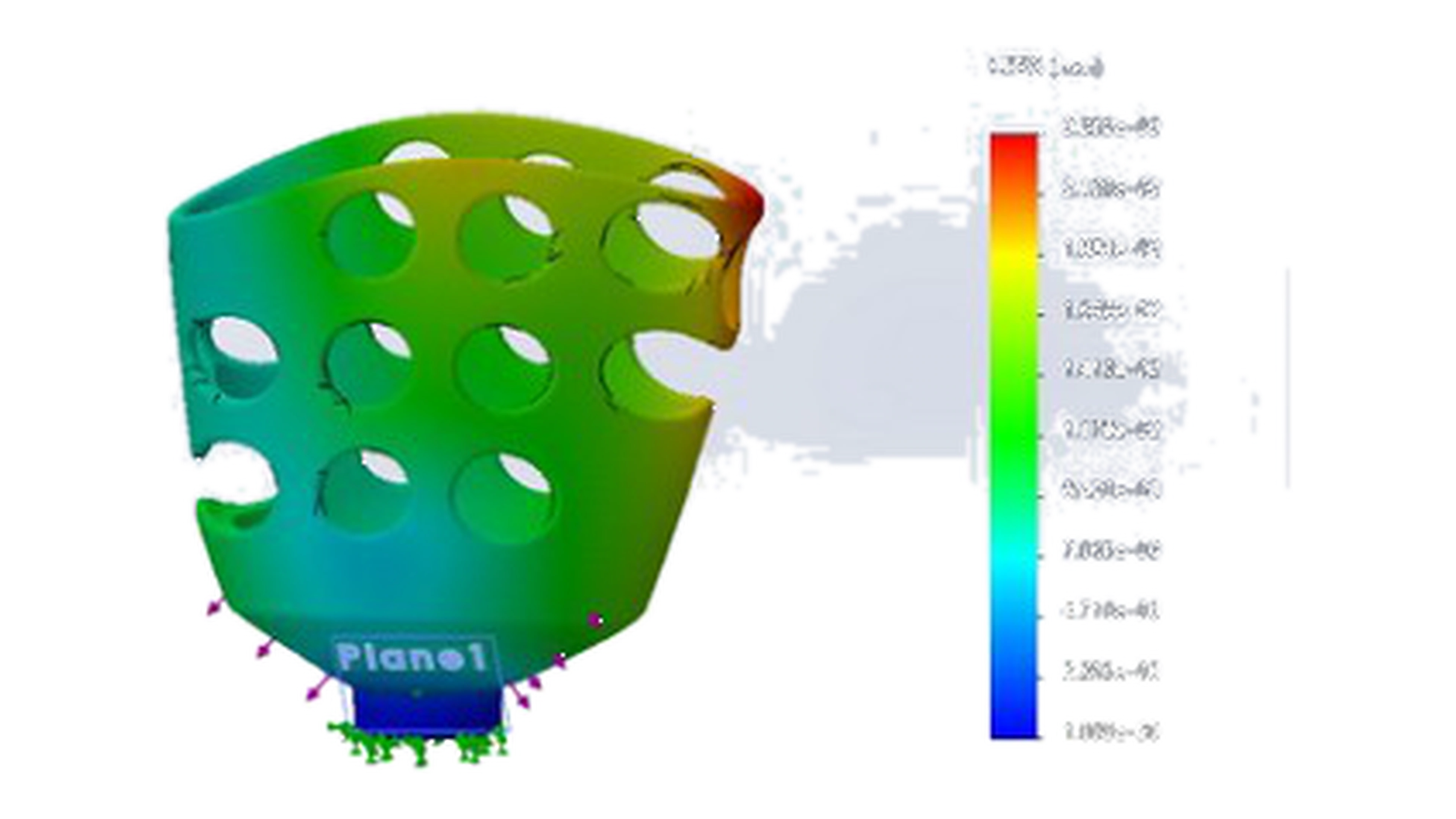
Displacement
Maximum displacement reported in the source figure: 0.02 mm.
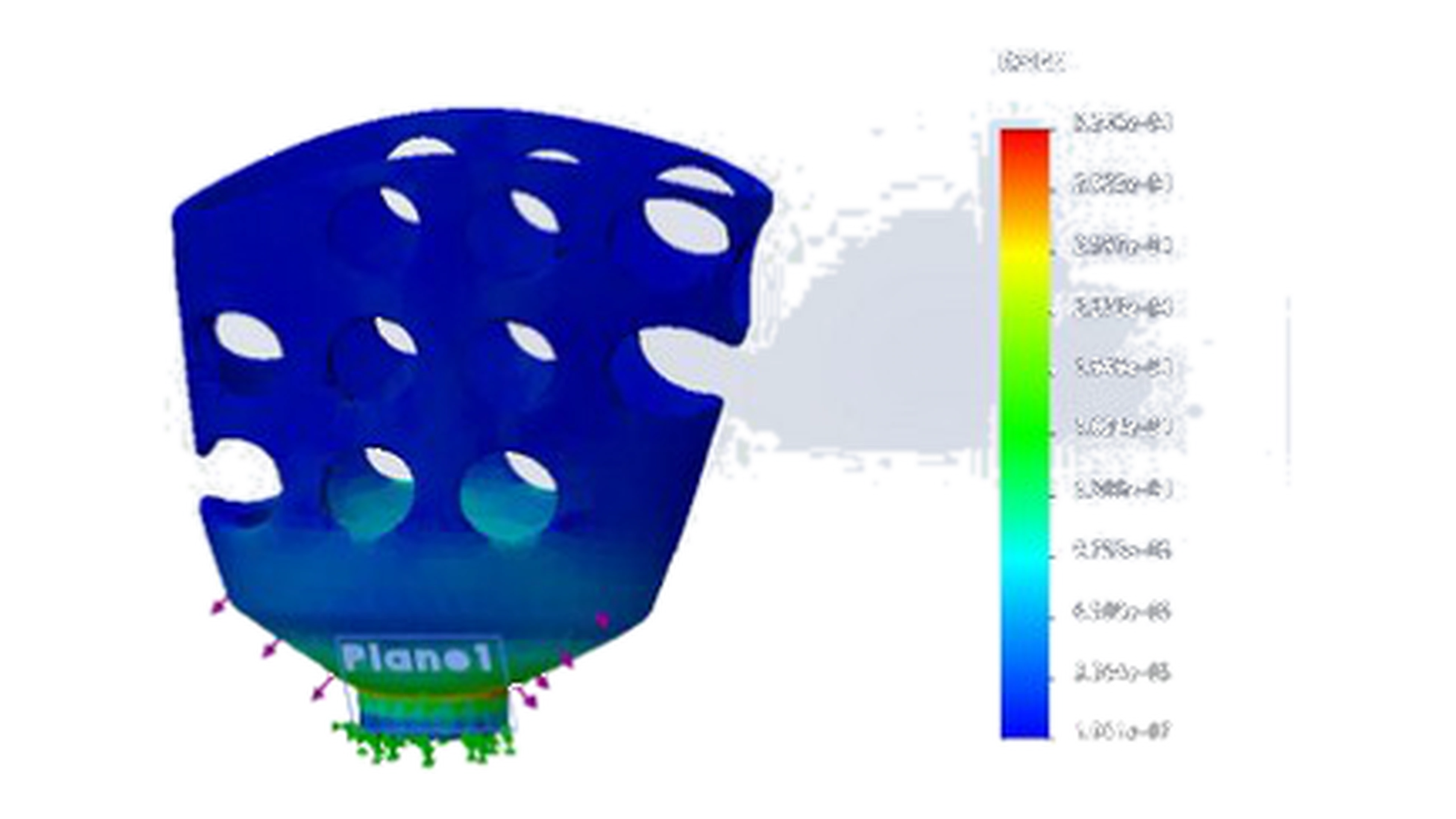
von Mises stress
Standalone stress output from the static-study source figure.
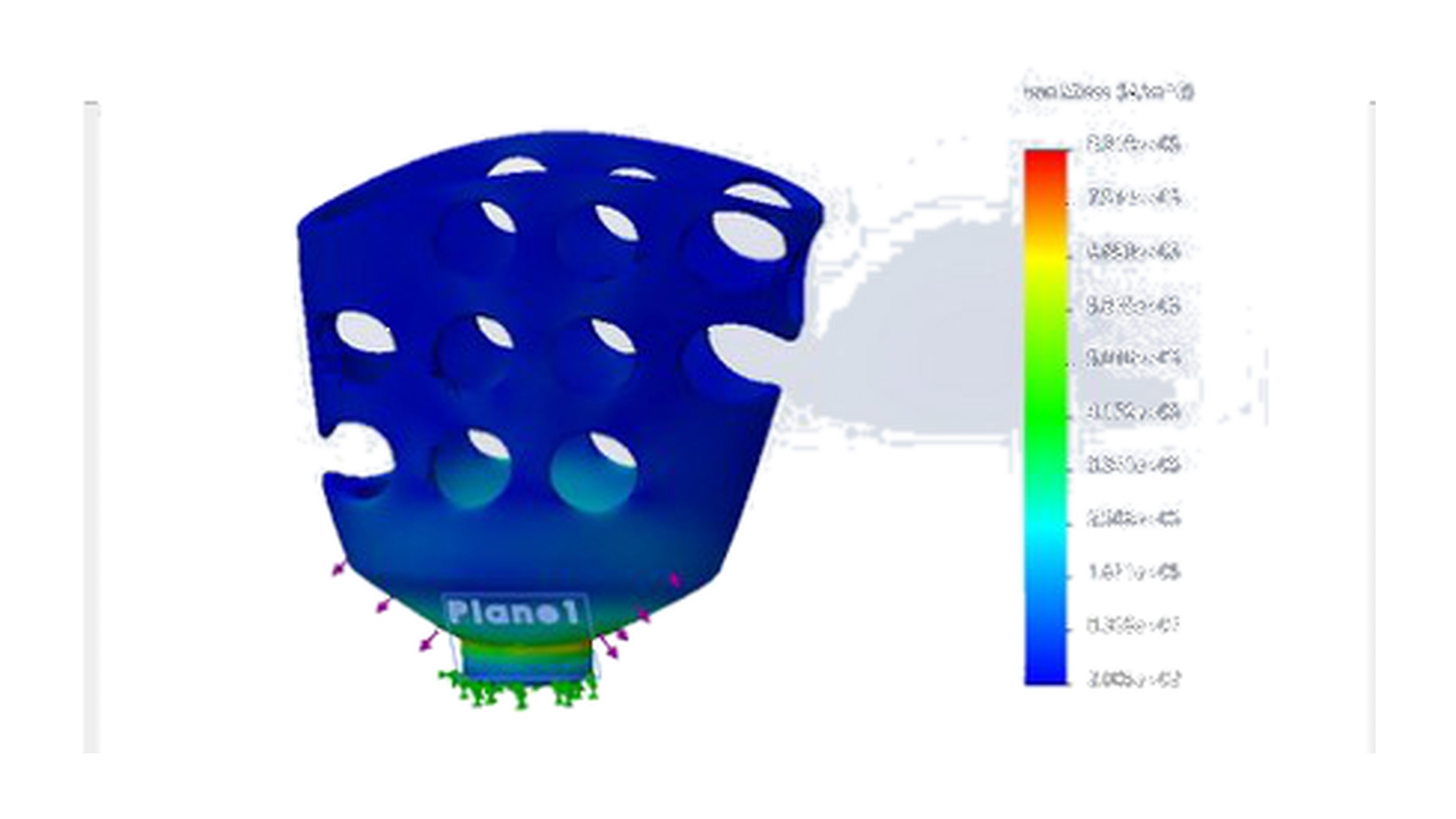
Strain
Standalone strain output from the static-study source figure.
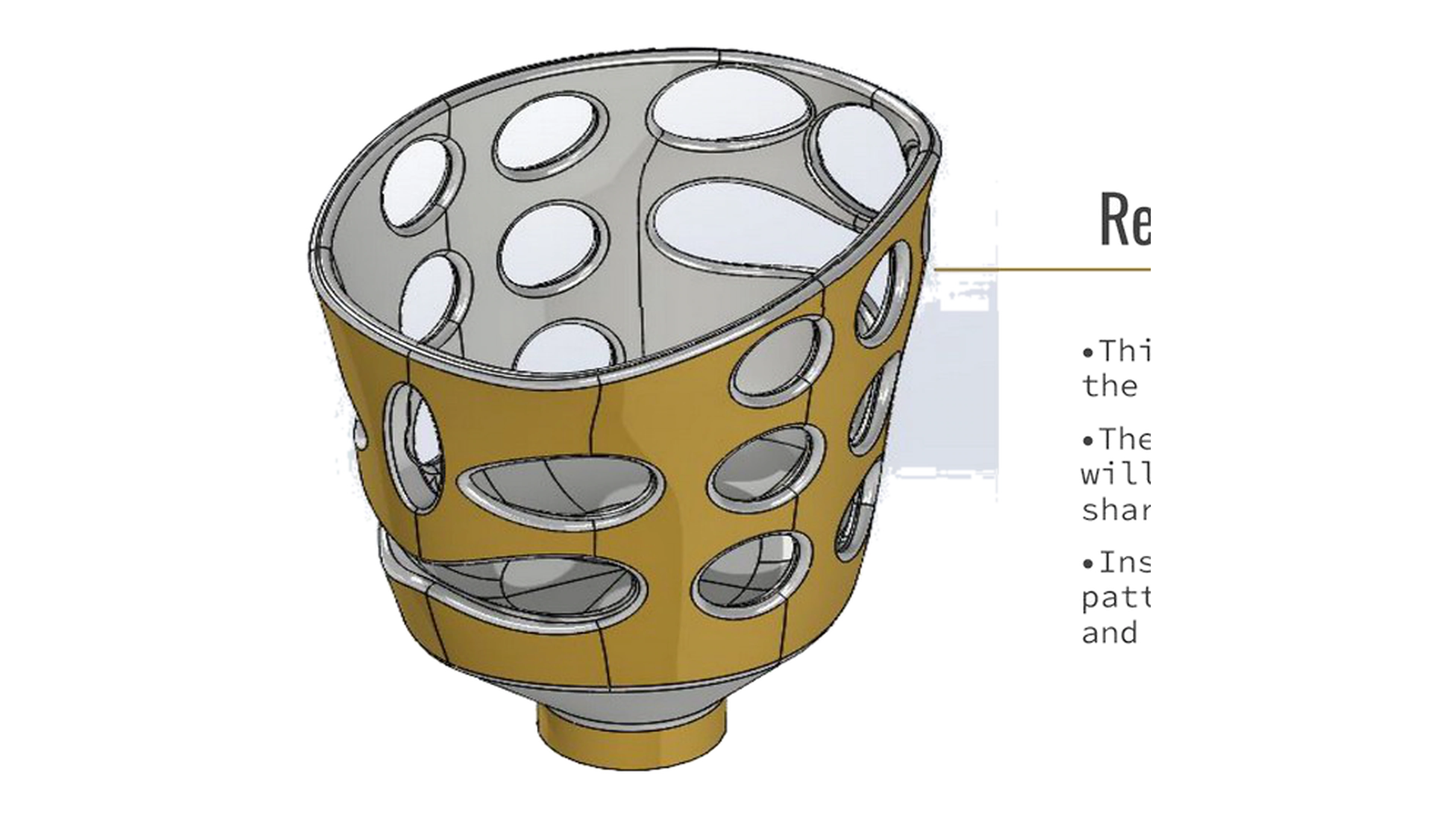
Translate the structural study into smoother geometry.
The topology-informed concept was converted into a smoother structure with filleted cutouts, ventilation, and reduced support demand.
Compare a more self-supporting orientation.
Manufacturing preparation considered build orientation, material use, time, and support demand.
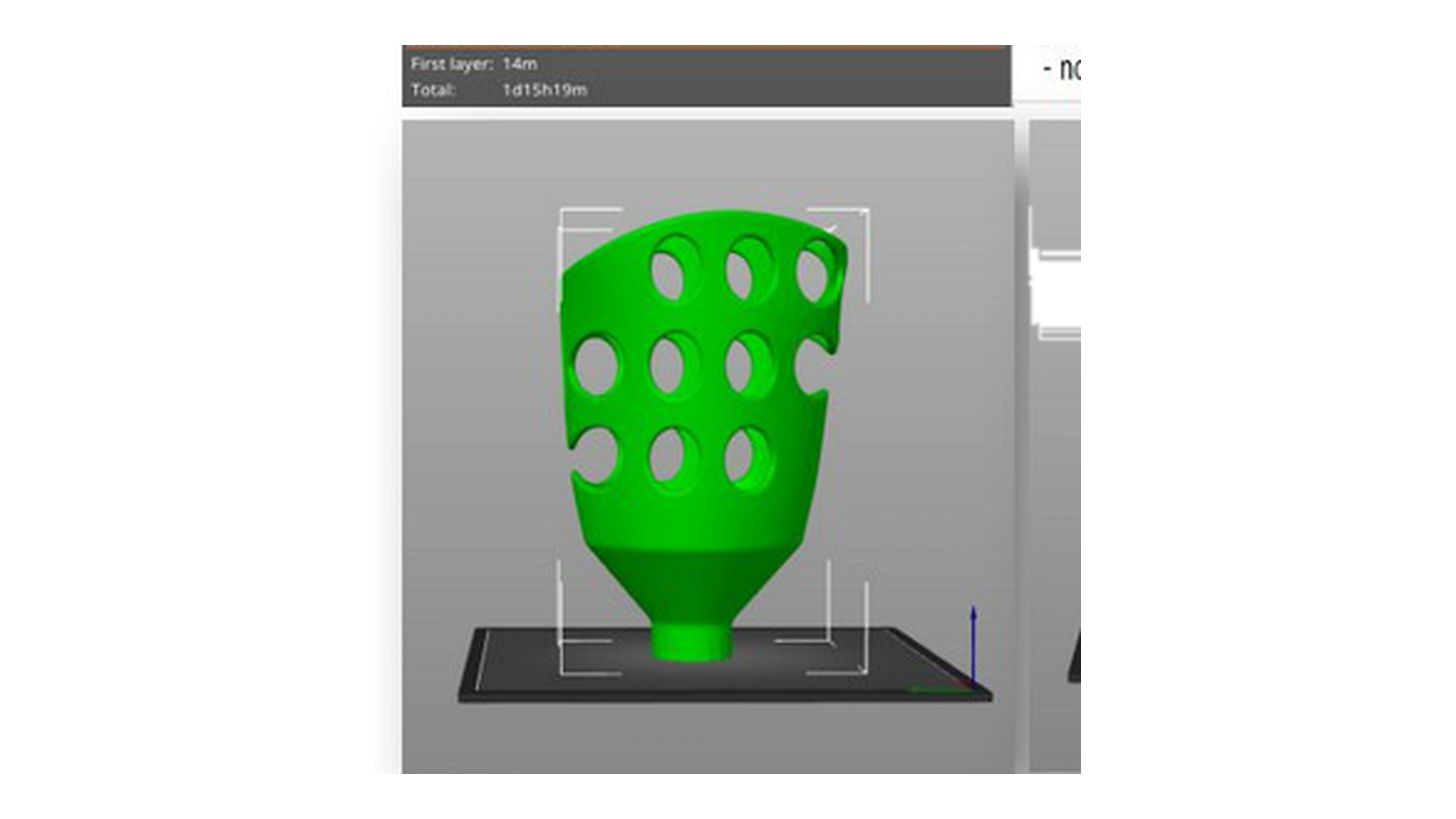
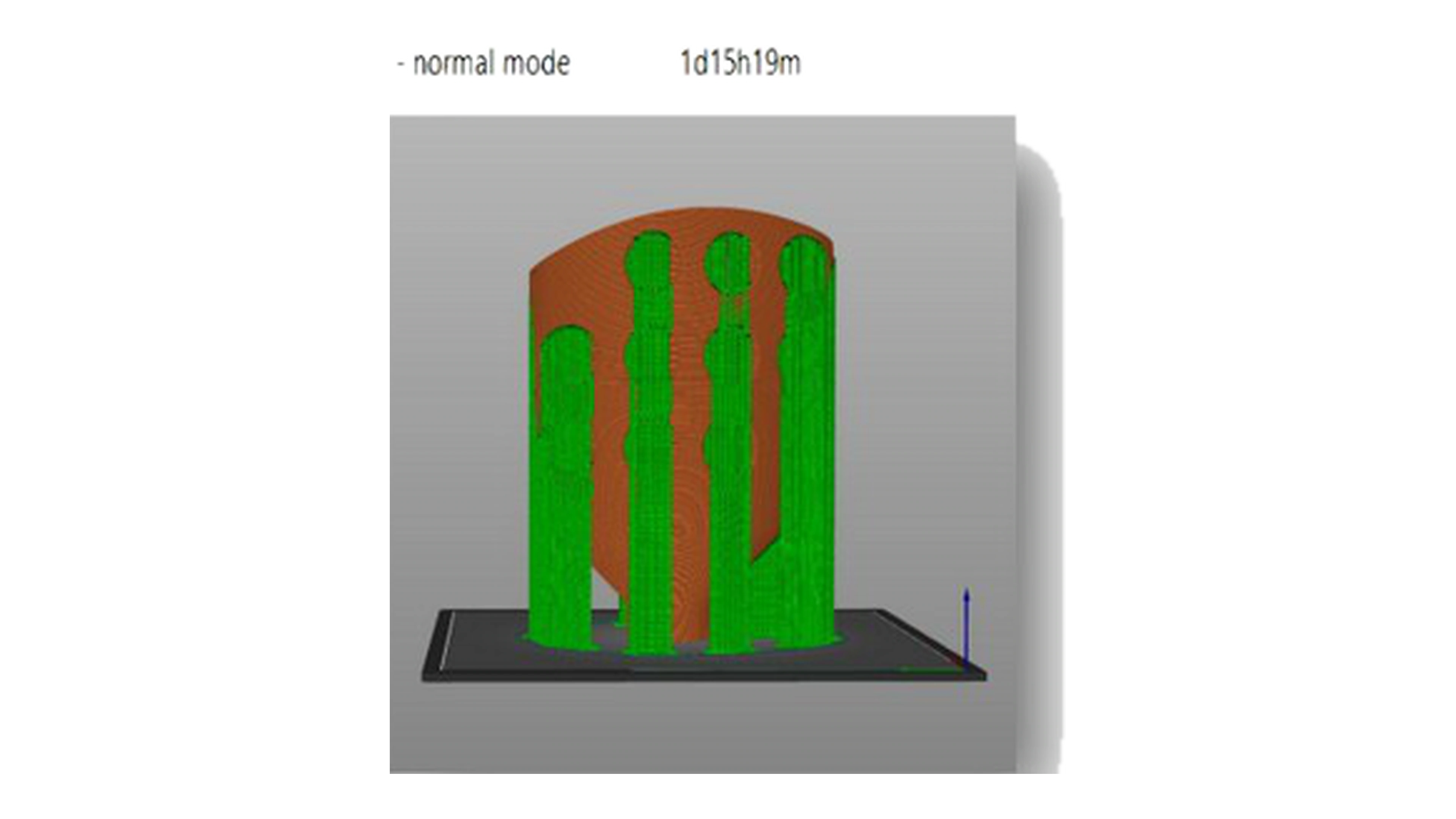
Review an alternate orientation with support structures.
The second orientation makes the support requirement visually explicit, helping compare additive-manufacturing tradeoffs.
Mass reduction: 740 g → 321 g
The portfolio reports a reduction in modeled mass after the iterative redesign.
Concept only — engineering study, not a clinically validated medical device.